


Pig
The white and red blood count of a pig is reminiscent of that of a patient with hemoglobinopathy and myelodysplasia. The substantial lymphocytosis of
9.5⋅109/L
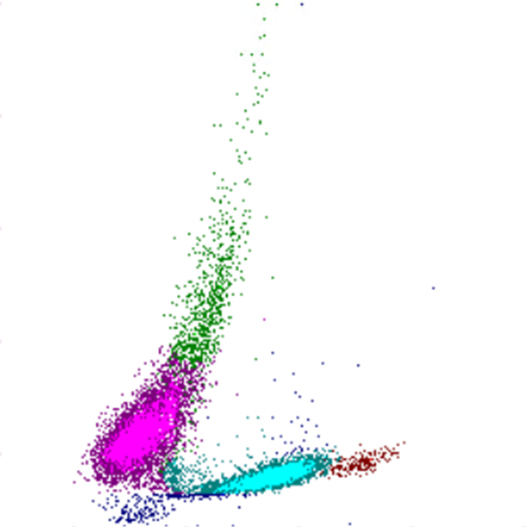
is reminiscent of a chronic lymphatic malignancy.XN Scatterplots
SFL
SSC
Lymphocytes
Monocytes
Neutrophils
Eosinophils
Basophils
Leukocytes
Basophils
NRBCs
Debris
Erythrocytes
Reticulocytes
RBC fragments
Platelets
immature platelets
Lymphocytes
Monocytes
Granulocytes
The WDF channel shows a clear dominance of the lymphocytic population , probably involving misclassification of lymphocytes as monocytes . The population of neutrophilic granulocytes is flattened and shifted to the left, which may indicate hypogranulation and/or aberrant nuclear segmentation . Only reduced erythrocyte size is observed in the RET tract .
Peripheral blood
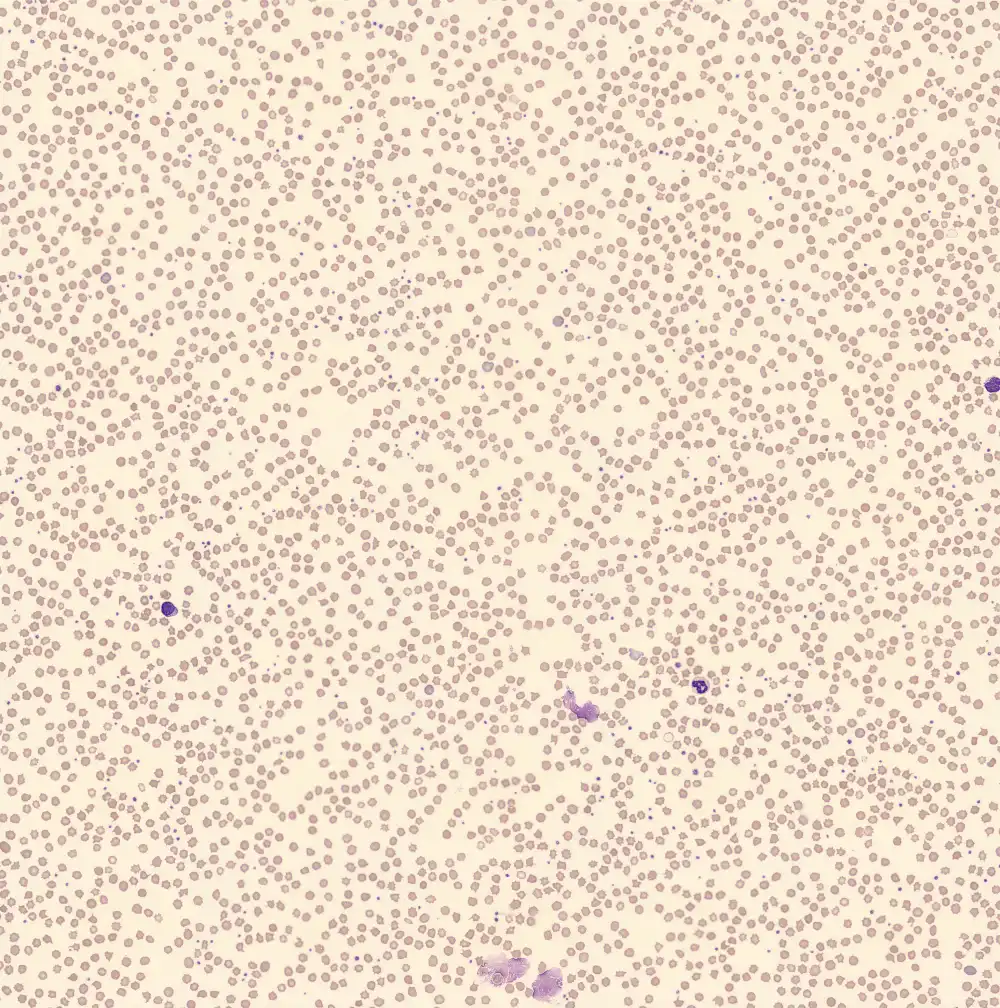
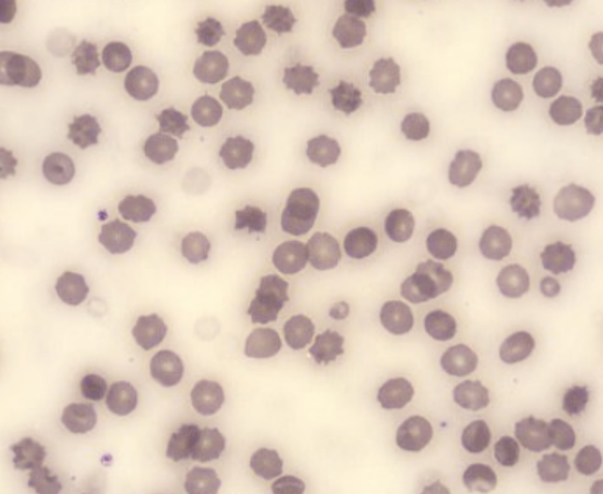
The peripheral blood contained overtly small, abnormal erythrocytes; particularly echinocytes. Hemoglobin was
6.2 mmol/L
and MCV was 54 fL
which in humans may well fit iron deficiency or a hemoglobinopathy. The large amount of echinocytes is an artifact; the cell membrane contains relatively more cholesterol and has a different distribution of various phospholipids (especially saturated fatty acids) compared to humans. This different composition makes the erythrocyte of a pig a lot more sensitive to dehydration artifacts and effects of EDTA.Neutrophils




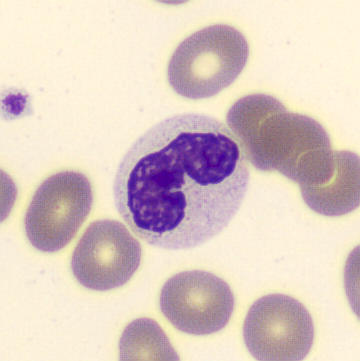
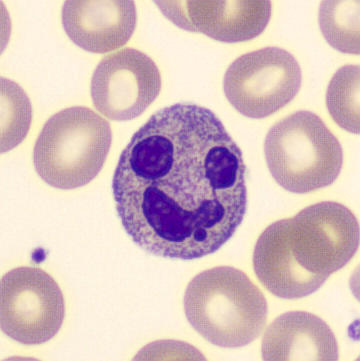
The neutrophils, as the WDF channel suggested, are hypogranular. The nuclear segmentation is a lot less defined than usual in humans. For a pig this is perfectly normal; in a human this may fit with myelodysplasia.
Lymphocytes






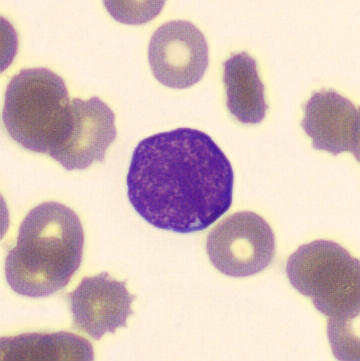
The lymphocytes show strong similarity to those of humans. However, the lymphocyte count is high at 60% within a total leukocyte count of
16⋅109/L
.Monocytes

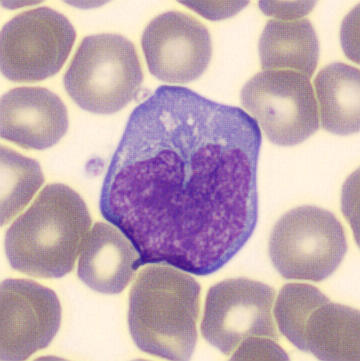
The monocytes are remarkably small compared to human monocytes. However, pig monocytes do exhibit similar blue-pink cytoplasm with some fine granules.
Basophils

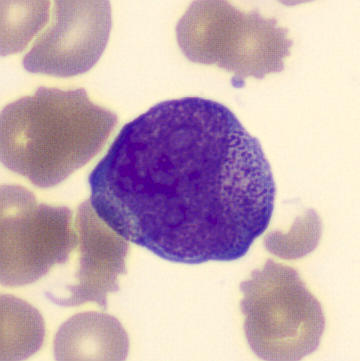
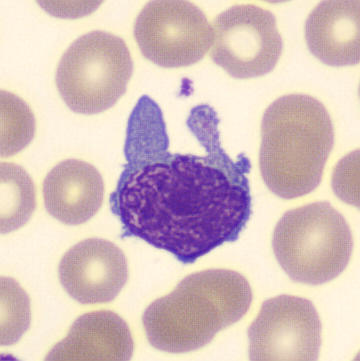
This basophil appears to show some hyposegmentation. However, only one basophilic granulocyte was present making this an incidental finding.
Eosinophils


The eosinophilic granulocytes are very similar to those of humans.